
How to Keep an Office Kitchen Stocked in London (2026)
Five ways to stock an office kitchen in London, from bulk buying to a managed pantry, with the right setup for your office size.



The short answer
Most London offices get the best value from a mix of suppliers, not one. Bulk buy snacks that keep. Run a weekly wholesale order. Get milk and fruit delivered before 9am. Go direct to specialists for pastries and wine. Offices of around 100 people or more should look at a fully managed pantry.
The cheapest way to buy something is not always the cheapest way to keep it stocked. Delivery charges, waste and staff time all count.
This guide is from Clara Office Management, a London marketplace that lets office managers find, book and pay for suppliers, services and events.
Five ways to stock an office kitchen

1. Bulk buying: cheapest for things that keep
Buying by the case gives the lowest price per serving on crisps, nuts, biscuits, cereal bars and tea. Decant big catering bags into jars to save more.
- Compare price per serving, not price per pack.
- Check minimum order quantities first.
- Buy weeks of stock, not months.
Best for: smaller teams with storage space.
2. Weekly wholesale delivery: the sensible middle
One delivery covers snacks, drinks, breakfast and kitchen basics. For most offices it is the best balance of price and effort. Once you know what your team gets through, the weekly order almost writes itself.
Our tip: the cheapest supplier per item is rarely the cheapest overall. Five separate orders can save on products but cost more in delivery fees and time.
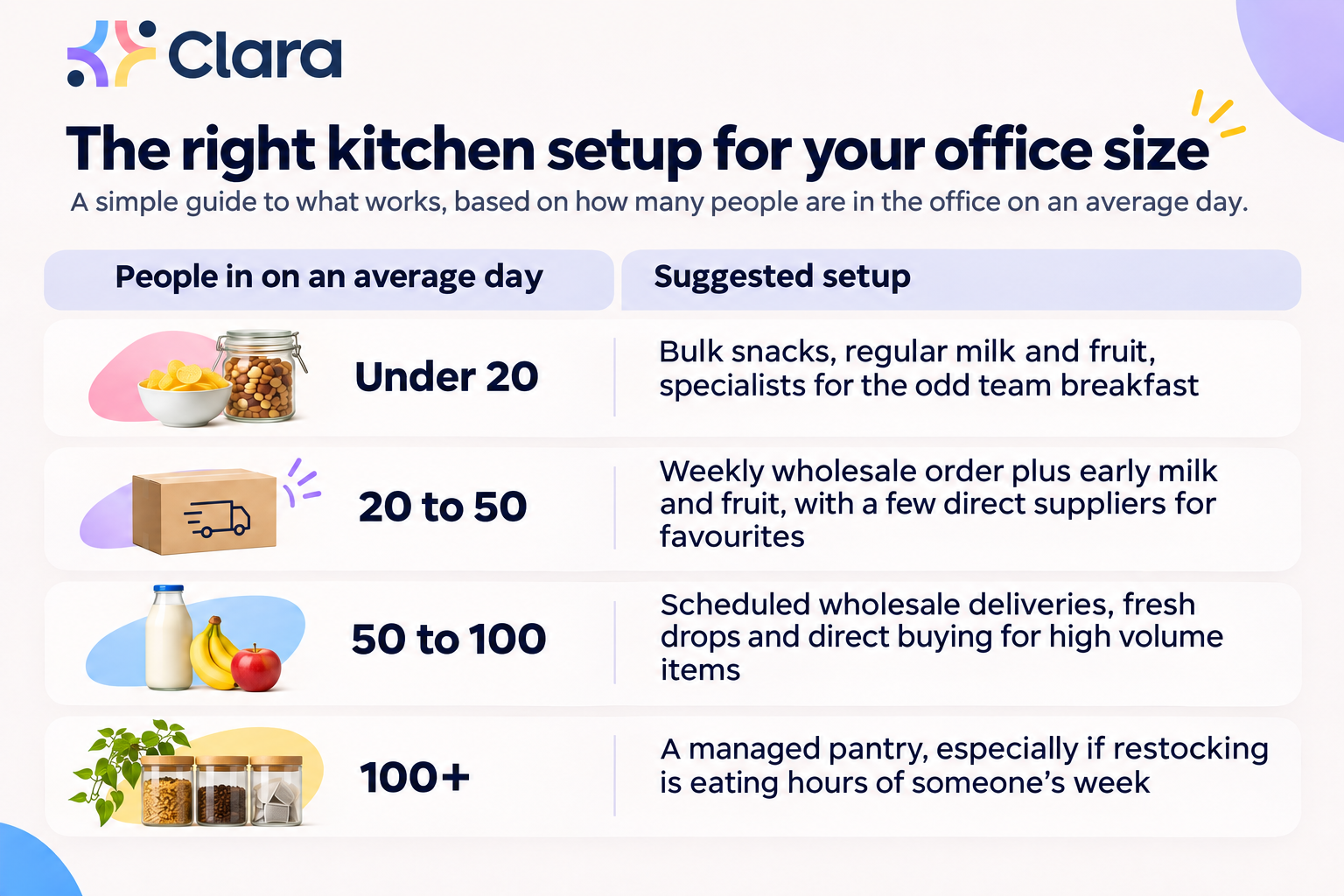
Best for: offices of 20 to 100 people.
3. Early morning milk and fruit: ready before anyone arrives
Suppliers on established early routes often price recurring orders keenly. Delivery lands before the working day, so nobody starts Monday with sour milk and a replacement due at 11.
It is not fully hands off. Someone usually still brings it in and puts the milk in the fridge.
Check before you sign up:
- Can the driver get into the building before reception opens?
- Where will it be left? Who brings it in?
- How quickly can the milk be refrigerated?
- Can you change quantities for bank holidays and quiet weeks?
No early access? A timed slot before most people arrive works too.
Best for: offices that want the kitchen ready at 9am.
4. Buying direct: where the hidden savings are
Going straight to a specialist often gets better quality for the same money, sometimes for less.
- Pastries: wholesale bakeries that supply London cafés and hotels often supply offices too. Trays can cost far less per head than coffee shop prices. Frozen bake off pastries work if you have an oven. Watch the minimums: 100 croissants is no use to a team of 15.
- Wine: a merchant selling by the case often gets you better wine for the same budget than a last minute supermarket run. Worth a look if you spend a few hundred pounds a month.
- Coffee beans: go direct to a roaster if you use several kilos a month.
- Cereal and porridge: catering packs beat supermarket boxes.
- Soft drinks: wholesaler cases often beat supermarket multipacks, especially on premium brands.
- Nuts and dried fruit: catering packs cost less per serving.
Only add a supplier if the saving is worth the extra admin.
Best for: offices that buy a lot of specific items or host regular breakfasts and drinks.
5. Fully managed pantry: paying for convenience
Someone comes in, fills the shelves and fridges, rotates stock and keeps it tidy. It costs more than deliveries. But the cheaper options carry a hidden cost: staff time spent ordering, chasing, unpacking and tidying. At 100 people that becomes a real job.
Our pick: Blue Tiger. They specialise in managed office kitchens. They are not on Clara yet, but we are happy to introduce you.
Best for: offices of 100+ people, or any office manager losing hours a week to restocking.
Which setup suits your office?
Five ways to cut the bill without making it worse
- Stop ordering what nobody eats. Still got a box of protein bars after three months? Drop them.
- Compare price per unit. A wholesale case is not always cheaper than a supermarket offer.
- Split suppliers only where it pays. Your milk supplier needn't sell you wine. But fewer orders can save more than shopping around.
- Order to attendance. Wasted fruit wipes out any saving on price.
- Count delivery fees and time. A cheaper product that takes an hour a week to manage is not cheaper.
A simple weekly routine
- Friday: check shelves and fridge. Place next week's order. Adjust milk and fruit for anyone away.
- Monday: bring in the deliveries. Get the milk in the fridge before people arrive.
- During the week: note what runs out early. Order more of it next time.
- Monthly: drop what isn't moving. Check your spend.
Are you overpaying?
Pull your last few receipts or invoices. Compare prices on your ten most bought items. You will often find one category priced well and another well over the odds.
Or send Clara your shopping list, invoices or a photo of your shelves. We will compare suppliers and show you where to save.
Free to use. Suppliers pay us a commission on orders booked through Clara. Price matched: you never pay more than going direct.
Get a free office kitchen price check →
Frequently asked questions
What is the cheapest way to stock an office kitchen?
Bulk buy long life items from a wholesaler. Use recurring deliveries for milk and fruit rather than ad hoc supermarket runs.
Is early morning milk and fruit delivery worth it?
Usually. The kitchen is ready when people arrive, and recurring route pricing is competitive. Someone may still need to bring it in and refrigerate the milk.
Can offices buy pastries from wholesale bakeries?
Yes. Many supply offices as well as cafés and restaurants. Check minimum orders and delivery areas first.
Is a wine merchant cheaper than a supermarket?
Not always per bottle. But buying by the case often gets you better wine for the same budget.
How often should an office restock?
Weekly for snacks, drinks and staples. Milk and fruit more often, depending on attendance and fridge space.
What is a fully managed office pantry?
A supplier restocks the kitchen for you: unpacking, filling shelves and fridges, rotating stock. It costs more than deliveries but saves staff time.
Can we still use the supermarket?
Yes. Most offices mix wholesalers, specialists and the odd supermarket run. Keep what already works.
Clara Office Management is a London marketplace that lets office managers find, book and pay for suppliers, services and events. Free to use. Suppliers pay us a commission on orders booked through Clara. Price matched: you never pay more than going direct.


Subscribe to our email newsletter today!


